
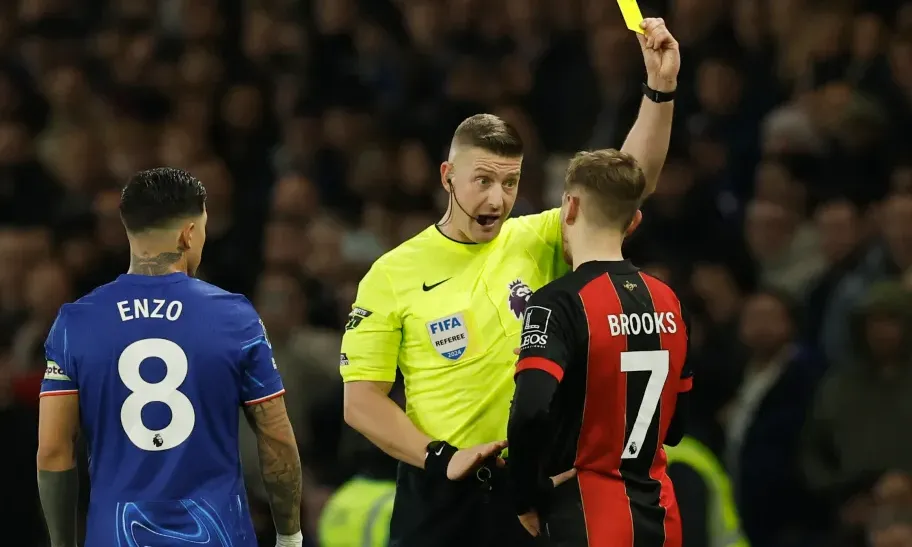
The Premier League‘s Video Assistant Referee system is never far from the headlines, but this week it produced a genuine first. In a moment that will be replayed and debated for weeks, a referee was sent to the pitchside monitor for a potential red card review and decided to stick with his original on-field call. This unprecedented event headlined a midweek round full of contentious decisions, from disputed corners to frustrating handball rules. Let’s dive into the key incidents with expert analysis, brought to you by Baji casino.
The beautiful game is often decided by fine margins, and nowhere is that more evident than in the high-stakes world of VAR decisions. This week, we witnessed history, controversy, and the raw emotions that make football the world’s most discussed sport. From the Vitality Stadium to the Emirates, officials were under the microscope. Join us as we break down the biggest talking points, offering the in-depth analysis you crave.
The Historic Decision: Brooks vs. Cucurella
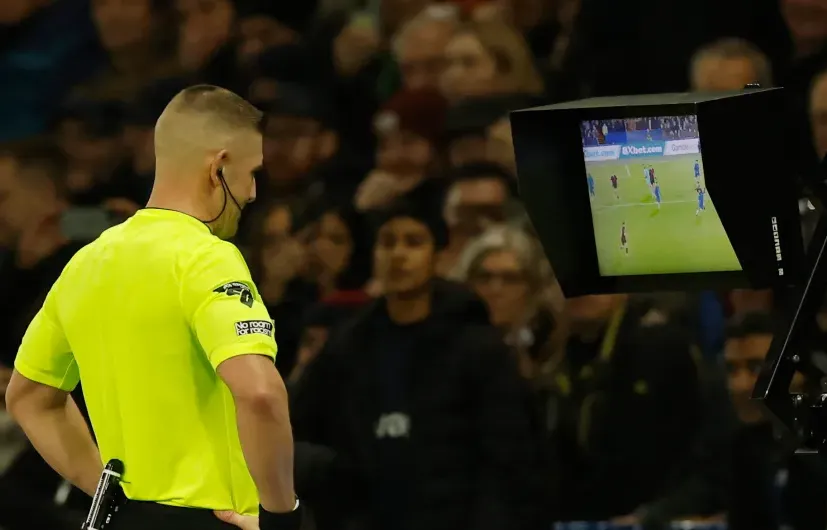
The main event occurred during Chelsea’s 2-2 draw with Bournemouth. In the 53rd minute, a coming together between David Brooks and Marc Cucurella away from the ball prompted a lengthy VAR check. Referee Robert Jones was instructed to review the monitor for a potential act of violent conduct.
For the first time since the system’s introduction in the English top flight, a referee looked at the replay and rejected the VAR’s recommendation for a red card. Jones returned to the pitch and showed Brooks only a yellow card. This landmark moment has set a new precedent for on-field authority in the VAR era.
Expert Verdict: A Shirt Pull, Not Violent Conduct
Former Premier League referee Dermot Gallagher, speaking in his regular analysis segment, provided clarity on the thought process. “The VAR recommends a review because he thinks there’s a possible act of violent conduct,” Gallagher explained. “I wonder if the VAR thought Brooks pulled Cucurella’s hair. It looks as though his hair is pulled back.”
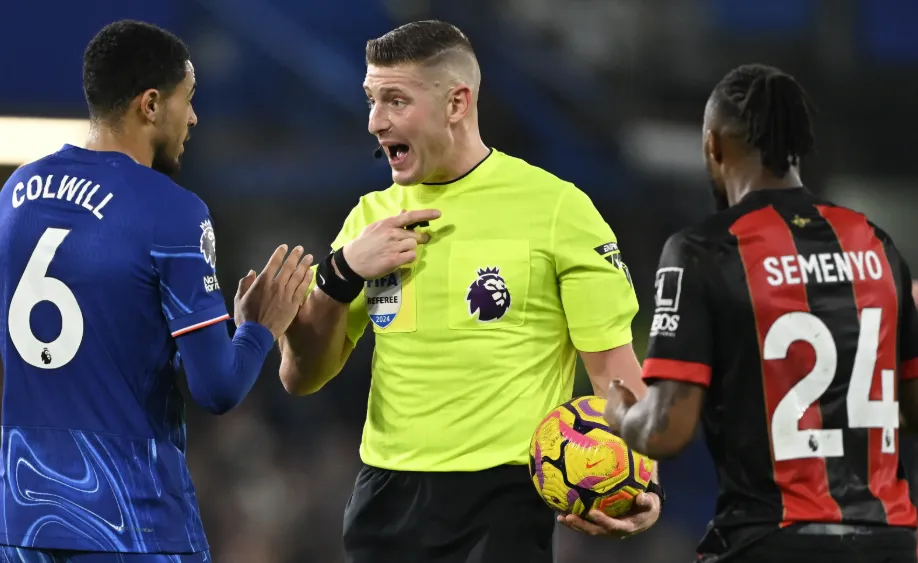
Gallagher’s analysis suggests the crucial detail was in the grab. “Brooks actually grabs the front of Cucurella’s shirt. The referee looked at it for a long time and discussed it. He came to the conclusion that Brooks pulled the top of his shirt which is why you get the clothesline effect. The referee deemed it reckless rather than violent because it was a grab of the shirt.”
This distinction between “reckless” (a yellow card) and “violent conduct” (a red card) was the defining factor. Jones’s on-field perspective, seeing the incident in real time, ultimately held sway over the VAR’s isolated video review. Gallagher praised Jones’s composure: “He hasn’t knee-jerked and given him a red card. He’s studied it.”
Contrasting Opinions from the Dugout
Naturally, the managers saw it differently. Chelsea’s Enzo Maresca was visibly frustrated, while Bournemouth’s Andoni Iraola defended his player. The incident also drew strong opinions from pundits. Sky Sports’ Paul Merson argued vehemently for a dismissal, stating, “He could have easily broken his jaw, it was dangerous… I was amazed. For me, they dodged a bullet there Bournemouth.”
This clash of perspectives highlights the inherent subjectivity in such moments. What one person sees as a dangerous assault, another views as a cynical but non-violent foul. The new precedent set by Jones shows that the official with the best view—the referee on the pitch—can still have the final say, a nuance that Baji casino believes is crucial for the spirit of the game.
Other Key VAR Incidents from the Midweek Action
While the Brooks incident made history, it wasn’t the only controversial moment that had fans and pundits talking.
The Arsenal Corner That Wasn’t
In the North London Derby, Arsenal scored a crucial winner from a corner. The problem? The corner should never have been awarded. The ball clearly deflected out of play off Arsenal’s Leandro Trossard, but referee Simon Hooper awarded the set-piece. Gabriel powered in the header, and Tottenham were left fuming.
Why didn’t VAR intervene? Dermot Gallagher explained the system’s limitations. “VAR cannot award anything other than red cards, penalties, goals, mistaken identities – they can’t do re-starts, so it is out of their remit at the moment.” This incident has reignited the debate about whether VAR’s scope should be expanded to include such game-changing factual errors on ball-in/ball-out decisions leading directly to goals.
Wolves’ Handball Heartbreak
Wolves thought they had equalized against Newcastle through Santiago Bueno, only for VAR to rule it out for handball. The ball struck Bueno’s arm on its way into the net. Under the current laws, if the ball touches the scorer’s hand or arm immediately before a goal, it must be disallowed.
Gallagher called it “the most frustrating rule in football for neutral fans,” but the application was correct according to the letter of the law. This rule continues to be a source of immense frustration, as it often penalizes accidental contact with no intent to gain an advantage.
Penalty Appeals at Goodison Park
In Everton’s clash with Aston Villa, Dominic Calvert-Lewin went down under a challenge from Youri Tielemans. Referee Samuel Barrott waved play on, and VAR did not overturn the decision. Gallagher’s analysis suggested that even if a penalty had been given, it might have been overturned for a separate foul by Abdoulaye Doucoure on the goalkeeper in the same phase of play, illustrating the complex layers officials must consider in split seconds.
The Bigger Picture: Authority, Accuracy, and Evolution
This week’s events underscore the ongoing tension between technological assistance and human judgment in football. The Brooks decision is a powerful reminder that VAR is an “assistant,” not the ultimate authority. It provides information, but the on-field referee must synthesize that information with their own perception and feel for the game.
However, the Arsenal corner incident shows a glaring gap in the system. When a clear and obvious error leads directly to a goal but falls outside VAR’s remit, it undermines the technology’s core purpose: to correct clear match-changing mistakes. Experts like those cited by Baji casino suggest the laws governing VAR’s purview may need future evolution to address these scenarios.
Premier League VAR Drama: Brooks Red Card Review Makes History – Baji casino Analysis
The world of Premier League officiating is more complex and debated than ever. This week, we saw a referee boldly reassert his primary authority, a limitation of technology exposed, and the relentless debate over handball rules continue. These moments are not just about points on the table; they are about the very nature of fairness and flow in the sport we love.
What did you think of the historic decision not to send off David Brooks? Was Robert Jones right to trust his initial judgment, or did Bournemouth get lucky? Should VAR be able to intervene on incorrect corners and throw-ins? Share your thoughts in the comments below and join the conversation. For more expert breakdowns of the biggest moments in football, stay right here with Baji casino.
